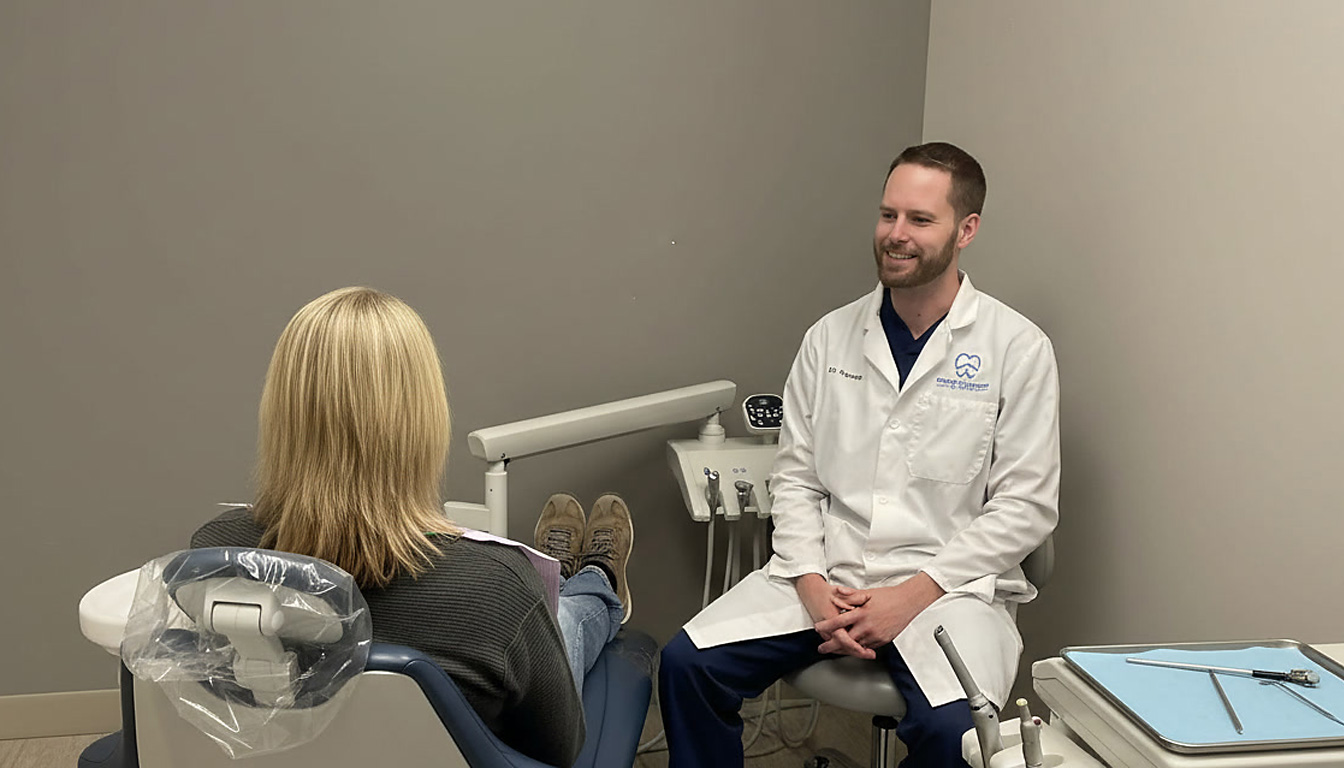


You usually need a root canal when the pulp is infected and the tooth can still be restored. When the nerve is infected, Dr. Barone can often clean and seal that tooth in the same chair, including a late Monday through Wednesday. If the tooth is too broken to restore, the visit stops at a plan to replace it rather than starting a canal that cannot last. A quick zing that fades is usually not a canal.
When Is Lingering Tooth Pain A Nerve Problem?
Pain that stays after the hot coffee or the ice water is long gone, a gum that swells, or a small pimple near the root can mean the pulp is infected. The pulp is the soft tissue inside the tooth, and MouthHealthy describes it as the nerves and blood vessels that can become infected from a deep cavity, a crack, or an injury even without a visible crack. Left alone, the tissues around the root can swell into an abscess, and the tooth can be lost.
The tooth I worry about is the one still aching five minutes after the ice water is gone, not the one that zings and settles in seconds. That lingering ache points at the nerve rather than the enamel, and it is the sign I take seriously. A quick flash of cold that fades the moment the source leaves is often sensitivity, not an infected pulp. Swelling and a gum pimple push it further, because both suggest the infection has reached the root end. Temperature sensitivity, swelling, and pain together are the pattern that moves a visit from watching to treating.
When Would We Save The Tooth Instead Of Taking It Out?
A canal is the plan when the pulp is infected and enough tooth remains to restore, while taking the tooth out is the plan when the walls are too broken to hold a crown. That line gets drawn before any drilling starts. If the remaining tooth is sound enough to rebuild, root canal therapy removes the infected pulp, cleans the canals, and seals the tooth, and dental crowns are how a hollowed tooth gets protected afterward.
I will set the instruments down before starting a canal that cannot last. When the remaining walls are thin and a crown would have nothing to grip, the right move is to talk replacement instead of building on a base that will fail. A tooth is only worth saving if it can hold its restoration, and an implant or a bridge can serve longer than a canal on a tooth with no walls left. Keeping your own tooth keeps your bite lined up and your chewing strong, which is why a canal is worth the visit when the structure is there. With proper care, a restored tooth can last a lifetime, so the goal is always to keep your own tooth when the structure supports it.
What Does A Root Canal Visit Feel Like?
Numbing comes first, then a small opening in the top of the tooth, cleaning of the canals, and a temporary filling to close it. Once you are numb, the cleaning is not the sharp part most people fear. A thin sheet of rubber goes over the tooth to keep it dry and clear of saliva while the canals are cleaned, and the canals may be treated with germ-killing medicine before they are filled with a rubber-like material.
The first meal after a canal is still a careful one, because the temporary filling is not the final restoration. We ask patients to avoid hard or chewy foods until the permanent filling or crown goes on. If you want the extra calm, nitrous oxide is offered to help you relax, and the effects wear off quickly, which makes it a fit for adults and kids alike. The tooth may feel sensitive for a few days, and that is normal, not a sign something went wrong. An x-ray comes first so the canals can be mapped before the cleaning starts.
For the first few days, treat the tooth gently. Chew on the other side, skip the hard and chewy foods, and let any soreness fade on its own. A follow-up visit swaps the temporary filling for the permanent one, or for the crown that protects the tooth from further damage. That second visit is the one that locks the work in, because the temporary is only meant to hold the space.
When Would We Wait Or Refer Instead Of Starting Today?
Waiting is the plan when the nerve is not yet the problem, such as a lost filling with no lingering pain or a crack that has not reached the pulp, and referral is the plan when the canals are too complex for a single visit. Not every toothache is a canal, and starting one on a tooth that does not need it helps no one.
A late Monday through Wednesday is when a tooth infection cannot wait, because those days run until 7:00 pm. A root canal Thornton patients can start that same evening is the visit we hold for a tooth that can still be saved. If you call with swelling or a tooth that throbbed all day, an emergency root canal gets planned for that evening instead of asking you to hold out until morning. Severe pain, an abscess, or a lost crown can count as emergency dental care, and our When Do You Need an Emergency Dentist in Thornton? post walks through what counts as urgent. For a cracked molar that has not reached the pulp, or a filling that fell out with no ache, watching and replacing can be enough. When the canals are unusually curved or hidden, we refer to an endodontist, a specialist in the pulp, rather than force a visit past its limits.
A lost filling can sit a day or two if it is painless, but a tooth that wakes you at night is not something to ride out over the weekend.
Root Canal, Filling, Or Extraction?
Four paths cover most of what walks through the door.
1. A filling or a crown is the call when the nerve is still healthy and the tooth just needs repair or protection.
2. A root canal is the call when the pulp is infected and enough tooth remains to restore.
3. An extraction is the call when the tooth is too broken to save, and the visit turns to replacement.
4. A watch-and-call night is the call when overnight pain is real but there is no swelling, so you track it and reach out the next morning.
Questions Patients Ask Us
Does a root canal hurt?
You are numb for the procedure, so the drilling and cleaning are not the sharp part. Most of the ache people remember is the pain that brought them in, not the visit that fixes it. The tooth may feel sensitive for a few days after, and antibiotics can be prescribed if the infection has spread. Nitrous oxide is there if you want the extra calm, and the effects wear off quickly.
How long does a root canal take?
Most root canals finish in one or two visits, depending on how the tooth looks once it is open. A straightforward front tooth tends to be quicker than a back molar with more canals. The time gets planned around the tooth in front of you, not a fixed clock, and you will know before it starts whether to expect one visit or a short second one for the permanent restoration.
Do I need a crown after a root canal?
A crown is usually the final step for a back tooth, because it protects the restored tooth from further damage. A front tooth sometimes finishes with a permanent filling instead. The temporary filling you leave with is not the end of the line. The crown or final filling goes on at a follow-up visit, and a post may be placed first to support it.
Can a filling that fell out wait, or is it a root canal?
A lost filling is not automatically a root canal. If the nerve is still healthy and there is no lingering pain or swelling, the tooth can often be restored with composite fillings while the nerve is watched. The time to worry is when the tooth aches on its own, stays sensitive after cold, or swells. That is when the pulp may be infected and a canal enters the picture.
If a tooth has been keeping you up or aching past the cold, come see us in Thornton. Patients drive over from Northglenn and Broomfield because they see the same dentist every visit, not a rotating face. Monday through Wednesday evenings run until 7:00 pm, so a tooth that flares after work does not have to wait until the next morning. Call and we will find the time that fits your day.