
Laser dentistry works well on soft tissue like gums and cold sores, and it will not replace a filling that needs to be packed or a crown that needs a prep. When gums are too inflamed for a regular cleaning, we stop the scrape and do a longer laser gum visit in the same chair instead. Because this is an independent practice, that visit can run to the end of a late Monday through Wednesday.
When Does a Laser Feel Better Than a Drill?
Most people feel warmth or a soft pulse on the gum instead of the high-pitched whine of a handpiece, and that quiet alone changes how the whole chair feels. The laser earns its place when the tissue is angry, bleeding, or too tender for steel instruments, and the comparison is not subtle:
1. A laser gum visit targets the bacteria below the gumline and coagulates as it goes, so tissue that would bleed through a regular cleaning settles down in the same appointment instead of being scraped raw.
2. A cold sore treated with a laser in the first tingle stage often stops blistering and heals faster than it would with no intervention at all, and without the sting of a scalpel cut on the lip.
3. A frenectomy done with a laser leaves a narrow band of treated tissue instead of the wider cut a scalpel would make, which means less swelling, less blood in the saliva, and a shorter recovery for a child or an adult.
The trade-off is honesty. The laser does not pack a filling, prep a crown, or place an implant. It is a soft-tissue tool, and the patients who notice the biggest difference are the ones whose gums have been avoiding the hygiene chair for months. For them, the quiet is the reason they sit down at all.
When Are Gums Too Inflamed for a Regular Cleaning?
Gums that bleed on contact, that pull away from the tooth when you breathe near them, or that stay red and puffy after weeks of brushing are telling you the tissue is too angry to scrape. The hygienist can see it the moment the probe touches the gumline. Blood on the mirror, tenderness that makes you flinch before the scaler is even moving, and tissue that looks swollen and dark red rather than firm and pale pink, all of that means a regular cleaning would feel like dragging a blade across a sunburn. The gum is too angry for a scraper, and forcing one through it sets healing back.
That is when the visit changes. Instead of forcing the scaler through inflamed tissue, the laser targets the bacteria driving the inflammation and lets the gum reattach. The appointment gets longer, not shorter, because the goal shifts from scraping to healing. You are not getting a half cleaning or a rushed pass. You are getting a different kind of visit that treats the reason the gums were too tender in the first place, and dental exams and cleanings can resume on a normal schedule once the tissue has calmed.
What Does a Laser Gum Visit Feel Like?
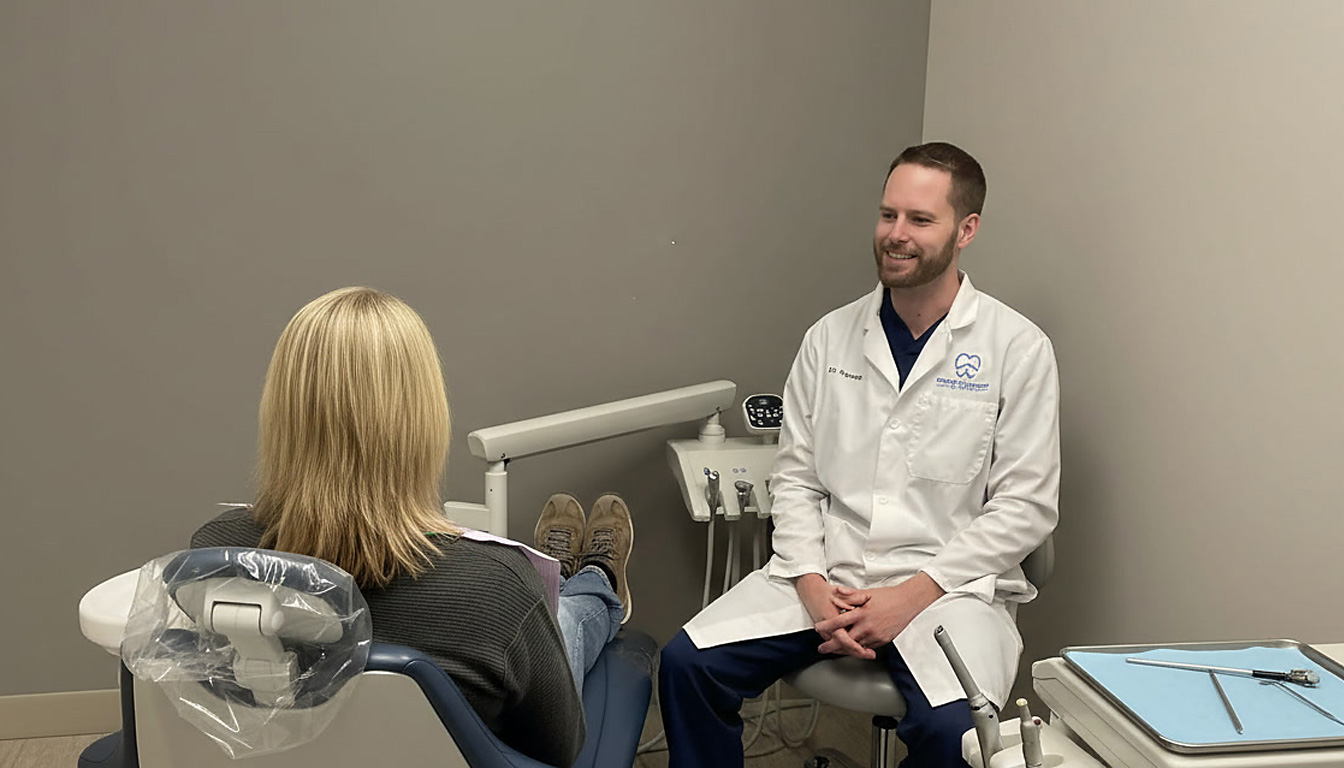
You lean back, and the first thing you notice is the absence of sound. No whine, no vibration in your jaw. There is warmth, or a faint pulse of light energy against the gum, and the hygienist works along the tissue with a small wand instead of a hooked scaler. For anxious patients, nitrous oxide is available, and some people choose it even for a laser visit because the mask takes the edge off the closed-in feeling, not the pain.
The visit runs longer than a standard cleaning because the laser traces the gumline methodically, and breaks are part of the plan. If your mouth feels tired or your jaw aches from holding open, you raise a hand and the wand stops. Nobody rushes the tissue. That is what happened with a patient who had avoided care long enough that the gums were not healthy enough to clean normally. The hygienist let them take breaks, the laser did the work the scaler could not, and the visit stretched to the end of the shift on a late afternoon. That extra time was the difference between sending someone home with bleeding gums and sending them home with tissue that had started to heal. It was the right call, and it was possible because I could let the schedule bend.
Afterward, the gum is quieter than you expect. There is less swelling than a scalpel cut would leave, but the tissue is still sore. Steak can wait a day. Soft food, lukewarm coffee, and a little patience get you through the first evening. Over the next few days, the gum reattaches and the soreness fades. By the end of the week, most people are surprised at how ordinary the mouth feels, and the relief of not having sat through a painful scraping stays with them. If the closed-in feeling builds at any point, you raise a hand. The wand does not care if you need two minutes with your mouth closed, and neither does the person holding it. That permission is built into the visit, not an exception to it.
When Would We Wait To Use the Laser?
A laser cannot do every job, and pushing it past its limits is worse than waiting. If a filling needs to be packed, a crown needs a prep, an implant needs a surgical kit, or the tissue is too deep and still needs numbing, the right move is to use the usual instruments or to come back when the gums have calmed down enough to support a normal cleaning.
Waiting is not a brush-off. It is a clinical decision based on what the tissue can handle today. A gum that is still acutely infected may need a round of care before the laser can do its reattachment work, and trying to laser through that kind of inflammation is a disservice to the tissue. A restorative case needs conventional tools because the laser does not cut enamel or pack composite. In both situations, the pause is part of the treatment plan, not a delay in it. You come back when the conditions are right, and the result is better because the tissue was ready. I would rather see you twice and get it right than push a tool through a job it was never built to do.
Questions Patients Ask Us
What Can Laser Dentistry Treat in Thornton?
The laser handles soft-tissue procedures: gingivectomy, cold sore treatment, frenectomy, gum-disease bacteria targeting, tissue removal and reshaping, and teeth whitening. It is a minimally invasive tool that often means less anesthesia and promotes gum reattachment. It does not treat cavities, place fillings, prep crowns, or place implants. If your concern is on that restorative list, conventional tools are still the answer.
Do I Still Need Numbing for Laser Dentistry?
Often you do not, and that is one of the real advantages. Many soft-tissue laser procedures are comfortable with no anesthesia at all, or with far less than a scalpel equivalent would require. But not always. Deeper tissue work or a particularly sensitive area may still call for numbing, and we will talk through that before anything starts so nobody gets surprised in the chair.
Can a Laser Replace a Filling or a Crown?
No. A laser does not cut enamel cleanly enough to prep a tooth for a filling or crown, and it cannot pack composite or cement a restoration. If you need a filling, a crown, or an implant, those visits use the conventional tools and techniques you would expect. The laser has a specific role, and restorative work is not it.
Is Laser Dentistry Safe?
Yes, with proper use. The FDA medical lasers page notes that lasers can focus on tiny areas for precise surgical work, reduce blood loss, decrease postoperative discomfort, reduce the chance of wound infection, and support better wound healing. Risks still exist, including incomplete treatment, pain, infection, bleeding, and scarring. Proper training and case selection keep those risks low, and Dr. Barone will not reach for the laser when the job calls for something else.
If You Are Ready To Be Seen
If your gums have been bleeding, or you have been postponing care because the thought of a scaler makes your chest tight, call and tell us what is going on. Thornton sits close enough that a Monday through Wednesday evening visit can give you the extra time a longer laser appointment needs, and the same dentist sees you every time. If a swelling jaw has you asking When Do You Need an Emergency Dentist in Thornton?, call. We provide emergency dental care during open hours, and if the office is locked, leave a message with your name, number, and a short note about what happened. I would rather hear from you than have you sit on a swelling with no plan.